Email : atul@iimshillong.ac.in
Office Ph.: +91 364 2308030


THE SEAT OF
KNOWLEDGE
THE HEART OF
TRANSFORMATION
Assistant Professor, Ph.D., IIM Indore
Email : atul@iimshillong.ac.in
Office Ph.: +91 364 2308030
Financial sector development; Financial Literacy, attitude & behavior; Financial Vulnerability; Financial Capability; Inclusive Finance; Poverty & Inequality; Elementary Education; and Healthcare Management
Macroeconomics, Indian Economy, International Economics, Development Finance
Financial sector development; Financial Literacy, attitude & behavior; Financial Vulnerability; Financial Capability; Inclusive Finance; Poverty & Inequality; Elementary Education; and Healthcare Management
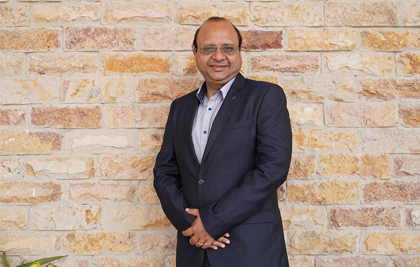
Atul Mehta is a faculty member in the Economics & Public Policy area at the Indian Institute of Management (IIM) Shillong. He holds an M.A. in Economics from Devi Ahilya University, Indore, and earned his Ph.D. in Economics from IIM Indore.
Dr. Mehta’s teaching portfolio spans a range of subjects, including Macroeconomics, Managerial Economics, the Indian Economy, International Economics, and Development Finance. His research primarily focuses on household finance, with particular interest in financial literacy, attitudes, behaviors, and well-being, along with financial vulnerability, inclusive finance, and the broader issues of poverty and inequality.
He has actively contributed to the academic community by presenting his work at prestigious national and international conferences, both in India and abroad. His research has also been published in peer-reviewed journals.
Prior to joining IIM Shillong, Dr. Mehta was associated with SRM University, serving at both its Delhi-NCR and Chennai campuses. He also brings experience in economic policy research, having worked with the National Council of Applied Economic Research (NCAER) in New Delhi and the Indian Institute of Health Management Research (IIHMR) in Jaipur.
During his career, Dr. Mehta has contributed to numerous projects addressing a range of rural and urban development issues, as well as critical healthcare challenges across India.
Completed Projects
Indian Institute of Management Shillong FOR ADMISSIONS FOR DEGREE/DIPLOMA VERIFICATION: pgp@iimshillong.ac.in





Contact us
Umsawli, Shillong – 793018
East Khasi Hills District, Meghalaya, India
P. (0364) 230-8000
epgp@iimshillong.ac.in
phd@iimshillong.ac.inHelp
An M.Psy. and D.Phil. (Psychology) from the Center for Advanced Study in Psychology, University of Allahabad. Prior to joining the Institute he had made a stint in the Consulting while working on a CSR assignment of the HONDA Cars, previously worked at the G.B.Pant Social Science Institute, Allahabad as a Lecturer and the Center for Advanced Study in Psychology, University of Allahabad. Prof Dwivedi received the DAAD Research Fellow in Center for Modern India Studies, Faculty of Management, Universität zu Köln, Germany

Associate Professor, IIM Shillong
Ph.D., University of Allahabad
Shri Vivek Singh is a public policy and communications professional. He was serving as OSD (Officer on Special Duty) to the Union Finance & Corporate Affairs Minister. He has been a part of the FM’s team in the last 5 Union Budgets and also worked in the Raksha Mantri’s office from November 2018 to May 2019. He was a corporate banker before joining the government.
He is an alumnus of Shri Ram College of Commerce (SRCC), ICAI and IIM Shillong. He is a regular contributor of articles and opinion pieces in leading business dailies where he writes on macro-economy and policy-related topics. While at IIM-Shillong, he was a part of the Student Council and won the Gold Medal for being the Best All-rounder and making the ‘Most Positive Contribution to Campus Life’.

Ex-OSD, The Union Finance Minister,
Alumnus, IIM Shillong
Mousumi Bhattacharya is an Associate professor in finance whose research interest spans the field of FINTECH and Financial Services, Mergers & Acquisitions, Corporate Restructurings, Corporate Finance, Business Valuation, Corporate Governance, Earnings Management, Banking and Financial Econometrics. She has done her post graduate degree in business finance, M.Phil. and PhD from University of Calcutta and she was a rank holder at both M.Phil. and post-graduation level. She also has a diploma in business finance from ICFAI University. She has more than 50 scholarly research publications in peer reviewed journals. She is currently the Editor in Chief of IIMS Journal of Management Science the journal of the Indian Institute of Management Shillong that publishes research contributions in all areas of management and its allied discipline.

Associate Professor, Ph.D., University of Calcutta
Rohit Joshi is currently working as a Professor in the Operations Management and Quantitative Techniques area at IIM Shillong. He is a Fulbright fellow. He has done his Postdoctoral Research work at UCLA, the University of California, Los Angeles, USA. He has obtained his Ph.D from Department of Management Studies, Indian Institute of Technology Delhi. He has received Master in Technology from Malviya National Institute of Technology, Jaipur, in Industrial Engineering and his bachelor degree in Mechanical Engineering. He is a Gold Medalist and the University topper in his M.Tech and B.Tech respectively. His areas of interest in consulting and teaching assignments include Supply Chain Management, Operations Management, Six Sigma and Lean Thinking, Business Statistics, Project Management, Value-engineering, Design Thinking and Creative Problem Solving.

Professor, Ph.D, IIT Delhi,Postdoc – UCLA, Los Angeles, USA
Maneesh Jaikrishna is currently serving as Regional Vice President for Middle East, APAC and Africa at Embross. Prior to this, he had had an illustrious 21 years career at SITA as the Vice President & General Manager for Indian Subcontinent, Dubai, Eastern & Southern Africa. He brings with him an extensive leadership experience in building organizations from ground up, business transformation and leading multi-functional teams in medium sized and large organizations across 30+ countries across ME, APAC, Indian Subcontinent & Africa while growing profitable businesses in the global Travel & Transport Industry. He has been instrumental in enabling win-win business outcomes through application of advance technology led IT systems and services to improve the travel experience, safety, security and operational efficiency for his airport, airline, government and other industry stakeholders.
Recipient of several awards, he had been nominated to SITA Board for 16 years and currently is an ExCo member in Embross. He has authored several articles, white papers as the media spokesperson which have been covered extensively in leading national and international publications. He had also been nominated to the Sectoral Innovation Council of the Ministry of Civil Aviation and as a member in the FICCI Civil Aviation Committee.
He holds a first class first B.E. (Hons.) degree in Electronics & Telecommunications of Mumbai University, and also an Executive Master of Business Administration degree from IMD Business School, Switzerland.

Regional Vice President for Middle East,
APAC and Africa at Embross
Shri. Ashutosh Dikshit has over 16 years of professional experience in the roles of Presales, Innovation Consulting, Marketing and Program Management. During his career, he has worked across organizations such as Deloitte, IBM, Wipro Technologies, Birlasoft and University College London. In his current role, Ashutosh leads the CxO and Executive Briefing Program for Europe, Middle East and Africa (EMEA) at Amazon Web Services (AWS) and is based in London. He is an alumnus of IIM Shillong (PGP 2008-10) and is one of the winners of the prestigious Global Peter Drucker Challenge (2015).
CxO Advocacy and Executive Marketing - Senior Manager EMEA,
Amazon Web Services & Alumnus, IIMS
Dr. Paula Sengupta is an artist, academic and curator resident in Kolkata. She graduated in Painting from the College of Art, New Delhi, followed by an MFA and PhD in Printmaking from Kala Bhavana, Santiniketan. She is currently Professor at the Department of Printmaking at Rabindra Bharati University, Kolkata.
She is author of The Printed Picture: Four Centuries of Indian Printmaking published by DAG, New Delhi and Foreign & Indigenous Influences in Indian Printmaking with LAP Lambert Academic Publishing, Saarbrucken, Germany.
Her curatorial projects include a soul (un)gendered: Anupam Sud – A Retrospective for DAG MODERN & KNMA, Delhi in 2019-20; Ghare Baire at the Old Currency Building, Kolkata for DAG MODERN and the Archaeological Survey of India in 2019; Popular Prints and the Freedom Struggle at the Drishyakala Museum, Red Fort, Delhi for DAG MODERN and the Archaeological Survey of India in 2019; the landmark exhibition Trajectories: 19th-21st Century Printmaking from India and Pakistan for the Sharjah Art Museum, Sharjah, UAE in 2014; and six editions of The Printed Picture: Four Centuries of Indian Printmaking for DAG MODERN, India from 2012-18.
Professor,
Ravindra Bharati University
Shri Atul Chandrakant Kulkarni is an Independent Management and Strategy Consultant in Infrastructure domain with special focus on Maritime Industry.
He has been advising various domestic and international clients on Feasibility Study, Project Master Plan, Business Plan, Operations and Strategy. He serves as Director on the boards of Eurasia Special Technologies Pvt Ltd. (Defense Equipment), Varti Agro Pvt Ltd. (Exports of Fresh Fruits), 3.Yuva Vikas Society (Skill Development), etc. He is also associated in the advisory committees and governing councils/boards of SNDT University, Mumbai, Adi Sankara Group of Institutions, Kerala, National Institute of Industrial Engineering (NITIE), Mumbai, among others.
He had earlier been associated in various roles including ‘C Level’ position with Chowgule Ports & Infrastructure Pvt. Ltd., V R Marine Services Pte Ltd, Singapore, Indian Ports Association, Gas Authority of India Limited, Deloitte Touche Tohmatsu India Pvt. Ltd, Ministry of Shipping, GoI, Camlin Ltd. and many others over his 3-decade professional career.
He is also Chairman of a Public Charitable Trust SEIL (Students’ Experience in Inter-state Living) focusing on National Integration.
Management Consultant,
Director Eurasia Special Technologies Ltd
Shri Shishir Bajoria is a well-known Industrialist and the head of S K Bajoria Group – manufacturing ceramics for the steel industry in India, UK, USA, Germany, China. His businesses also include insurance services involving health and travel insurance administration, claim settlement, insurance and re-insurance broking; as well as an Art Gallery.
He has been the President of the Indian Chamber of Commerce- Kolkata, Honorary Vice Counsel for Denmark in Eastern India and has also been a Director of the State Industrial Development Corporations of Orissa (IPICOL) and West Bengal (WBIDC). He has been Knighted by the Governments of Denmark in 1998 and Italy in 2006.

Chairman Board of Governors, IIM-S
Head of S K Bajoria Group